
Nursing Head-to-Toe Assessment Checklist for Clinical Excellence
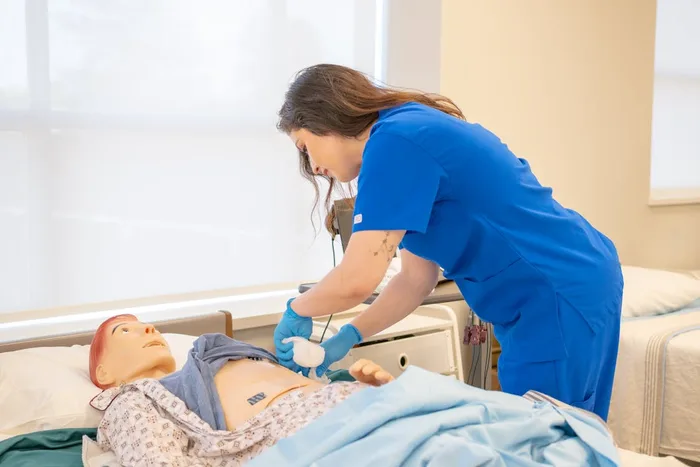

Conducting a head-to-toe nursing assessment checklist includes a detailed physical examination that establishes the baseline of the patient’s condition, with their needs and potential problems defined by the assigned specialist. If the patient’s status is hard to investigate without repeat assessments and requires a more detailed investigation, an expert medical editing service can fine-tune your paper to reflect plausible data.
Using a systematic approach in the nursing assessment process ensures the patient does not have any serious abnormalities and their vitals are within the healthy limits for an adult at rest. Nurses must follow the procedure with legitimate information supporting their decision-making and create a patient picture that will come across as both informative and holistic. The patient-centered strategy in the head-to-toe assessment process proves to be the key to effective evaluation. This guide will walk you through every step, from preparation to documentation, to ensure you have the necessary skills for conducting patient-friendly care.
What Is a Head-to-Toe Assessment?
A head-to-toe nursing assessment is a complete physical examination of the patient that evaluates every major body system, from the general appearance of the person in question to their vital signs and hygiene, posture, behavior, and mood. The purpose of the assessment is to collect objective and subjective data about the patient and detect any major health concerns that must be addressed immediately.
Unlike the focus patient assessment that targets a single patient report or complaint, this assessment checklist is ideal for annual check-ups and shift-to-shift reports as it allows the nurse to observe the dynamics in real time and refine the report if needed. The outcome of the assessment must always account for the patient’s previous medical evaluations and baselines. The assessment checklist must also feature the primary assessment elements: inspection, palpation, percussion, and auscultation to ensure patient safety and all-around observation.
Before You Start - Safety and Setup
Before the nursing assessment checklist and a nursing narrative note are compiled, the patient’s consent, security, and well-being must be ensured. Here is what an effective setup entails:
- You must always introduce yourself and explain the procedure in simple words.
- Patient privacy should be maintained at all times, whether through closed doors or draped curtains.
- Hands must be cleaned thoroughly before and after patient contact.
- Nurses are instructed to check the patient’s ID to ensure their identity is valid before they proceed.
- Only overhead lighting is allowed for clear observation (no flickering lights, dim lighting, or natural light is allowed).
- The assessment should be conducted calmly and confidently to ensure mutual cooperation and build trust between nurse and patient.
- Evaluate the patient’s level of consciousness and pain level before you begin the procedure.
Just like with any nursing process that must be approached with a due level of calm and responsibility, you need to start with a general conversation to make the patient feel at ease. A patient who is comfortable with your presence is more likely to cooperate willingly and give you honest and collected responses.
What Equipment Should You Have Ready for a Head to Toe Assessment
Before you begin, make sure you have the following assessment checklist equipment at the ready:
- Stethoscope
- Penlight or flashlight
- Blood pressure cuff
- Thermometer
- Pulse oximeter
- Tongue depressor
- Gloves
- Pain assessment tool
- Alcohol wipes
- Blanket or drape for privacy
- Chart, notepad, or digital documentation device
Having the right instruments at hand ensures a smooth transition to each step of the assessment process and prevents delays. If you struggle with organizing tools for your patient checkup or need someone to provide you with a complete guide on how to perform an evaluation, place a request to write my nursing paper online and get your head to toe assessment checklist ready within a few days.
Head-to-Toe Assessment Checklist (Step-by-Step)
Use this structured head to toe assessment example to conduct a clear evaluation:
General Survey & Vitals
- Assess level of consciousness, orientation, and speech clarity
- Observe for signs of distress, grooming, hygiene, body position, and facial expressions
- Check body temperature, heart rate, respiratory rate, blood pressure, and blood saturation
- Look for subtle cues that disclose distress (subdued speech, withdrawn position)
Head, Eyes, Ears, Nose, Throat
- Examine the head shape and look for signs of trauma
- Check PERRLA (pupils equal, round, reactive to light and accommodation)
- Inspect for drainage and hearing impediments in the ears
- Look for patency and bleeding in the nose
- Assess mucosa for hydration, lesion, and dentures in the throat
Neck
- Tracheal deviation or jugular vein distension signal abnormalities
- Touch carotid pulses and if the range of motions remains symmetrical
Chest & Respiratory
- Examine if the patient has difficulty breathing
- Investigate lungs anterior and posterior
- Check for vesicular sounds (within the range of normal)
- Check for abnormal sounds (wheezing or crackling are abnormal)
- Observe general respiratory rate and effort
Cardiovascular
- Auscultate heart sounds over the aortic, pulmonic, Erb’s point, tricuspid, and mitral areas. Look for any irregularities or abnormal heart rhythms.
- Check for brachial, radial, posterior tibial, and dorsalis pedis peripheral patient pulses to determine irregular beats.
Abdomen
- Request information and updates on the last bowel movement.
- Check for tenderness and palpate slightly while listening to bowel sounds.
- Inspect contours, movement, scars, or pulsation in the abdominal area.
Genitourinary
- Make sure the area is approached with maximum politeness and concern.
- Ask for the quality of urine output (odor, frequency, color, discomfort)
- If the case is appropriate, ask about any usual discharge
Musculoskeletal
- Mobility, gait, posture, and balance examination
- The patient must perform subtle movements (lift arms or bend knees)
- Monitor agility, muscle strength, or muscle deficiency
Neurological
- Conduct a screening test asking about the day of the week, the last three words, etc.
- Evaluate balance and sensory responses of the patient, check reflexes
- Check pupil size and pupil reactivity
- Evaluate orientation, alertness, and memory
Integumentary
- Inspect skin, hair, and nails
- Look for rash, bruises, wounds, or scars
- Check for moisture, temperature, firmness, and thickness
If you are looking for timely help with nursing assignment, use the expert’s assistance to secure accurate nursing advice and writing aid that always arrives before the deadline.
What to Document After a Head-to-Toe Assessment
Your assessment checklist, similar to a nursing concept map, is aimed at a clear and concise description of vitals and the patient’s overall health status measured through objective and subjective lenses. Avoid generalized terms and do not use informal speech to describe the patient’s complaints in written notes. Make sure the report is timely to avoid omitting the most critical details of the patient’s condition and stick to measurable and researchable facts.
No personal opinions or assumptions are allowed in the final head to toe assessment checklist, with only neutral observations surviving the nursing committee’s scrutiny. After the document is checked for essential data, the nurse must include vitals, system-by-system checkups, the patient’s pain level (if applicable), as well as practical interventions and immediate treatment plans. Use the approved formats that include:
- SOAP note in nursing (subjective, objective, assessment, plan)
- PIE note in nursing (problem, intervention, evaluation)
- DAR note in nursing (data, action, response)
If any changes in the baseline have been observed throughout the process, a diagnosis must be delivered in accordance with these changes. The nurse conducting the examination must always include the necessary credentials and establish the entry date for enhanced accuracy.